TRAVEL NOTE—SMITHSONIAN INSTITUTIONS, OCTOBER 2024
EN.
Dr. Lucie Mbogni Nankeng
Postdoctoral Researcher “Reconnecting Object” https://reconnecting.art/
Center for Marron Cultures and Lessa’art Kids Academy https://lessaa.org/
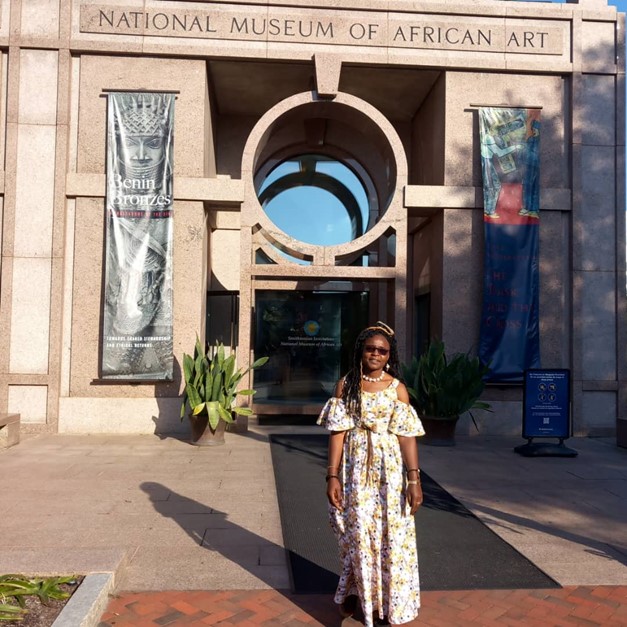
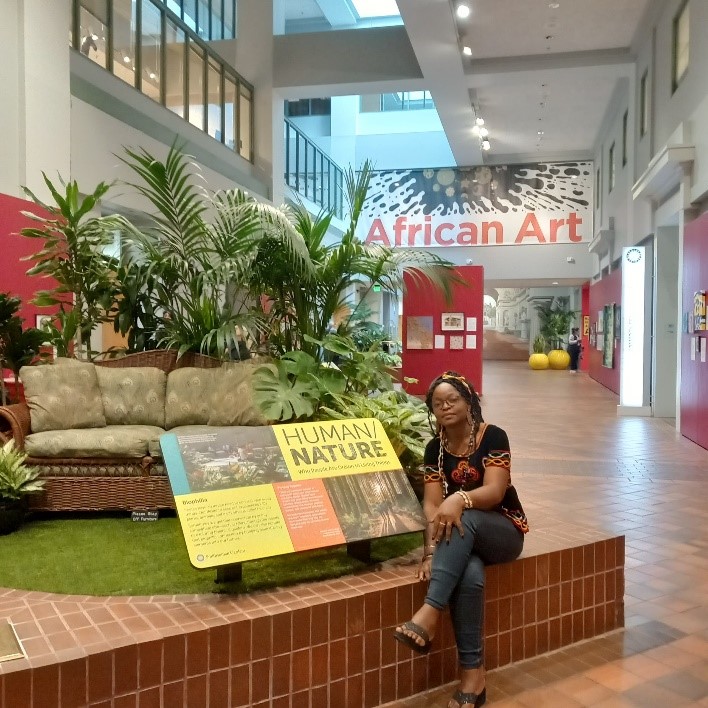
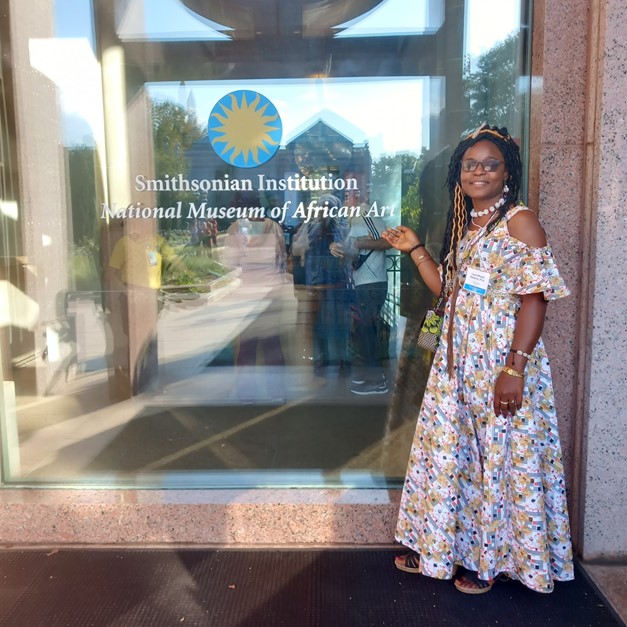
Sources: images Lucie Nankeng, 7 octobre 2024, Washington DC/Smithsonian Institutions/National Muséum of Africain Art.
INTRODUCTION
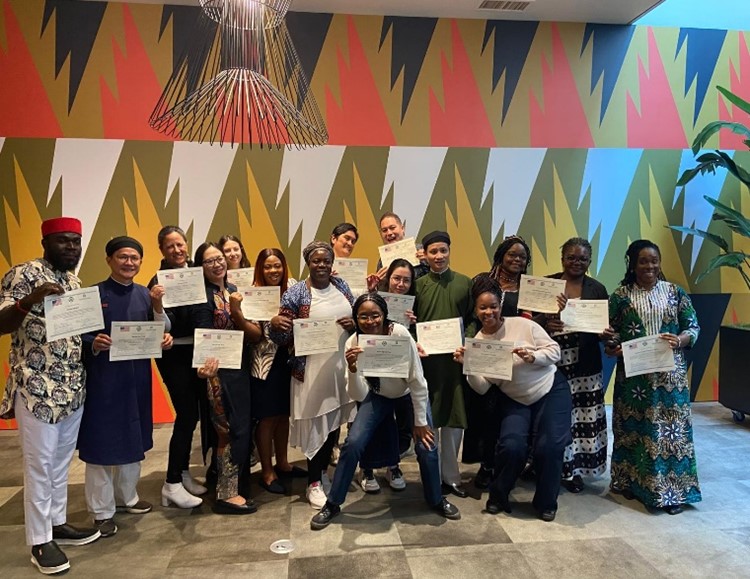
From October 7 to 18, 2024, I had the honor of participating in an exceptional exchange program organized as part of Cultural Heritage Forward, an initiative by the Smithsonian Institution. This program brings together cultural heritage experts and source communities to collaboratively reflect on new museum practices and issues related to the restitution of cultural objects. The October 2024 edition gathered an international cohort of colleagues from Nigeria, Cameroon, New Zealand, and Vietnam, fostering rich and diverse intercultural exchanges alongside members of the U.S. government and the Smithsonian’s multidisciplinary team.
My participation in this first in-person meeting in Washington, D.C., as an expert member in cultural heritage and a permanent liaison with local communities, centered on the collection of Cameroonian works at the National Museum of African Art, particularly the sacred Byeri reliquary statue—a ritual artifact of the Fang people from southern Cameroon’s Ntem Valley—currently displayed in the public exhibition. The discussions also aimed to explore the concept of shared stewardship in contemporary museums and examine how to operationalize this idea when reviewing current museum collections.
A brilliant and dynamic team at the Smithsonian coordinated this exchange program, welcoming us so warmly that we wished to stay longer to continue the conversations. I extend my gratitude to them once again, and onward we go!
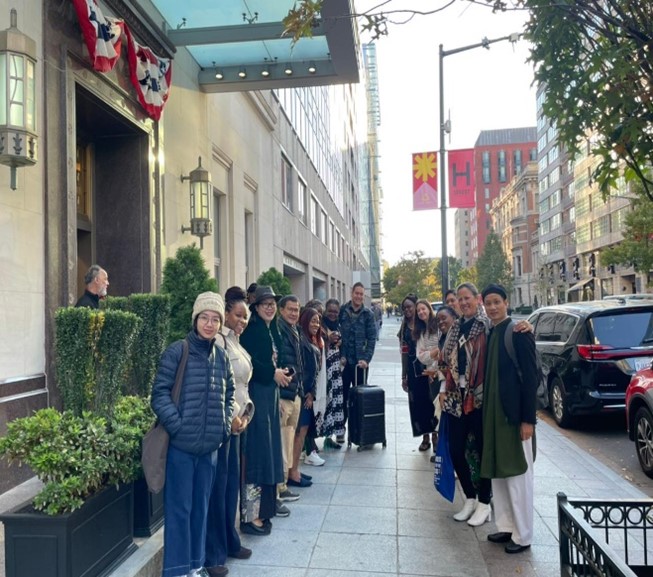
Source: images from LIZ and DUNG, on 18 october 2024 at Washington DC.
THE BYERI RELIQUARY:
A SPIRITUAL AND CULTURAL HERITAGE
The Byeri reliquary statue, which holds a central place in the rituals of the Fang people found geographically between Cameroon, Gabon, Congo, and Equatorial Guinea, represents more than just a cultural object: it embodies the spiritual connection between the living and the ancestors. Sculpted in an anthropomorphic manner, it serves as an intermediary between the two worlds, guiding and protecting the community. For the Fang people of Cameroon, this statue is a living link, whose presence and protection ensure collective well-being. Access to the statue is strictly reserved for initiates, in order to preserve its sacred and spiritual dimension. The relocation of this statue outside of its original context has profoundly affected the Fang community, and its presence in foreign museums may raise questions about its historical trajectory, its current and transformed identity, as well as how these sacred objects should be managed, respected, and, possibly, restituted.
THE CULTURAL HERITAGE FORWARD PROGRAM:
A SPACE FOR REFLECTION ON SHARED STEWARDSHIP
The Cultural Heritage Forward program, which I participated in, aimed to bring together experts and practitioners of heritage from diverse backgrounds to engage in a common reflection on crucial issues such as the shared management of cultural heritage within an ethics of relationship. These exchanges allowed for a deeper understanding of contemporary museum issues, particularly how to rethink the restitution of cultural “objects” taken out of their original context, as well as the implementation of new shared stewardship practices.
The question of shared stewardship, in particular, was at the heart of the discussions, aiming to go beyond traditional models where museums unilaterally manage cultural objects, giving them new identities and meanings without considering the communities that produced them. This innovative model seeks to include communities of origin in the management and preservation of their own heritage, fostering ongoing dialogue and recognizing the cultural rights of peoples. This includes the active participation of communities in decisions related to the restitution and conservation of objects, as well as the integration of traditional knowledge into modern museological practices.
EXCHANGES WITH CAMEROONIAN COMMUNITIES AND ESPECIALLY THE FANG COMMUNITY:
AN ESSENTIAL PROCESS
During and after this meeting, I had the opportunity to discuss with colleagues from various backgrounds and engage in a dialogue with the cultural and traditional authorities of Cameroon (Bamendjinda, Bamendjo, Babété, Bamendjou, among others), and especially the Fang people, including the paramount chief, His Majesty Mvondo (with colleagues from the Cameroon team of the cohort). These exchanges were essential in understanding the sensitivities and issues surrounding cult or ritual objects, or objects/subjects that were looted, bought, or exchanged, and are circulating outside the African continent since the colonial period, including the Byeri Reliquary statue. During discussions with His Majesty Mvondo and the Cameroon team, he expressed his surprise and incomprehension regarding the presence of the statue at the Smithsonian. He also praised the initiative to restore the links with this sacred artifact and the communities of origin. He emphasized that the statue represents much more than just an object: it embodies the spirit of the ancestors and the cultural continuity of the Fang.
These discussions laid the foundation for a questioning process about a shared history and future relationships that would not only be limited to the physical return of the statue and objects taken from their communities of origin, but would also involve a deeper engagement from the communities in the management and protection of their heritage. Shared stewardship is manifested here through an inclusive and respectful approach to local cultures, allowing communities to be active participants in their own history and the management of their sacred objects in and through museums.
THE RESTITUTION PROCESS AND SHARED STEWARDSHIP
A first symbolic act was carried out during my stay and the exchange program in Washington D.C.: the Byeri Reliquary statue was removed from its public exhibition at the National Museum of African Art at the Smithsonian by the Cameroon team, consisting of Dr. Rachel Mariembé, Lucie Mbogni Nankeng, and Ladies Benis and Paule Dassi, in collaboration with the museum’s team. However, instead of being returned directly to its original environment, the Byeri Reliquary figure was placed in the museum’s reserve, and an administrative process was initiated by the museum authorities to ensure continued research activities on this sensitive piece and many other works from the Cameroon collection.
This gesture marked the presence/absence of the artifact in the museum and its collections, and its sacred role, not to be displayed to the uninitiated public. This was designed as an acknowledgment of the Byeri reliquary figure as a living spiritual entity still central to the Fang community, while marking a step toward its restitution or shared stewardship. This process goes beyond the simple physical repatriation of the statue and involves also the recognition of shared management of this sacred object and the involvement of the communities in its preservation and respect. This could include conservation protocols developed in collaboration with the communities of origin, as well as the creation of new museum spaces that reflect these partnerships.
A collective text from the Cameroon team was drafted to explain to the public the reason for the removal of the Byeri Reliquary figure from the public exhibition. The necessity of provenance research related to this artifact and many other objects from the collection was also clearly stated by the Cameroon team to the museum authorities, and we are happy with the ongoing developments in this regard.
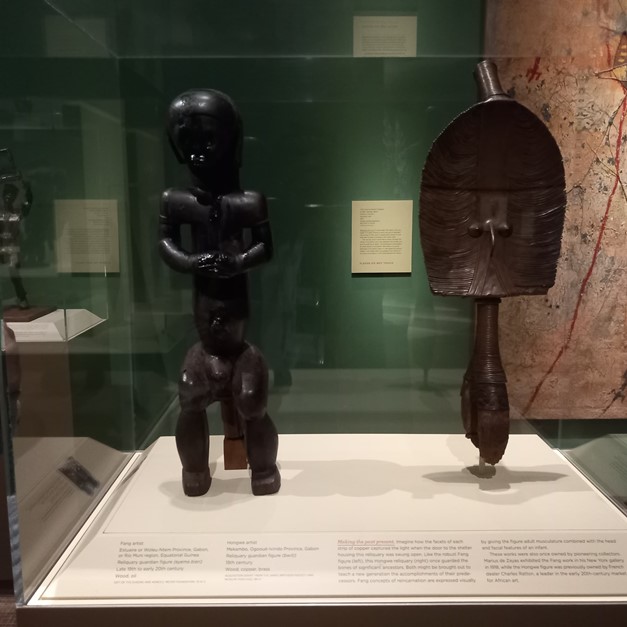
Source : images Lucie Mbogni Nankeng, October 15, 2024, public exhibition of the Byeri reliquary figure at the Musée national d’art Africain/Smithsonian.
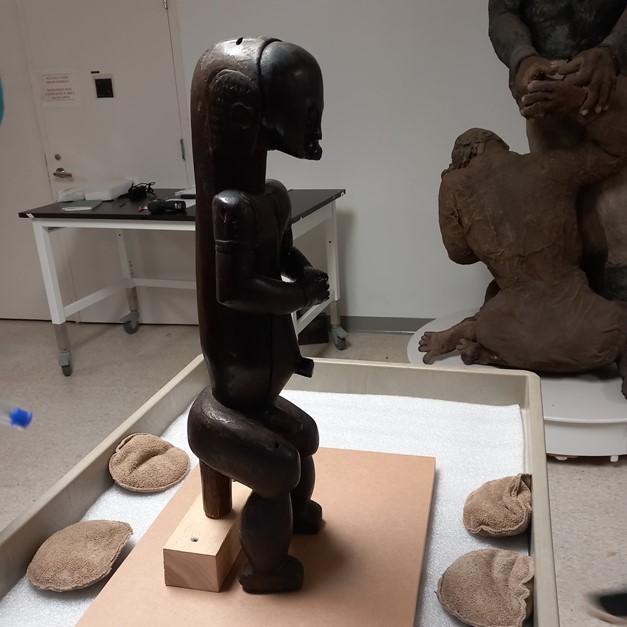
Source: images Lucie Mbogni Nankeng, the Byeri reliquary figure moved to the National Museum of African Art/Smithsonian storeroom by the museum team and Team Cameroon.
A PEACEFUL MUSEUM:
TOWARD A FUTURE OF RECONCILIATION AND MUTUAL RESPECT
This exchange program at the Smithsonian allowed us to question traditional museological practices and promote a more respectful and inclusive management model. It also showed that museums, far from being closed spaces of conservation, can and must become places of exchange, where cultures of origin have their place and where reconciliation and the recognition of cultural rights are paramount. Shared stewardship and restitution are not just about the return of objects but also about promoting mutual respect and healing historical injustices.
CONCLUSION
IN CONCLUSION, this experience, enriched by exchanges with colleagues from Nigeria, Cameroon, New Zealand, and Vietnam, laid the foundation for a fairer and more respectful future for museum practices, recognizing the rights of communities of origin. Thanks to the Cultural Heritage Forward program, we opened a space for reflection on how museums can participate in reconciliation and the preservation of cultural heritage in a globalized world.
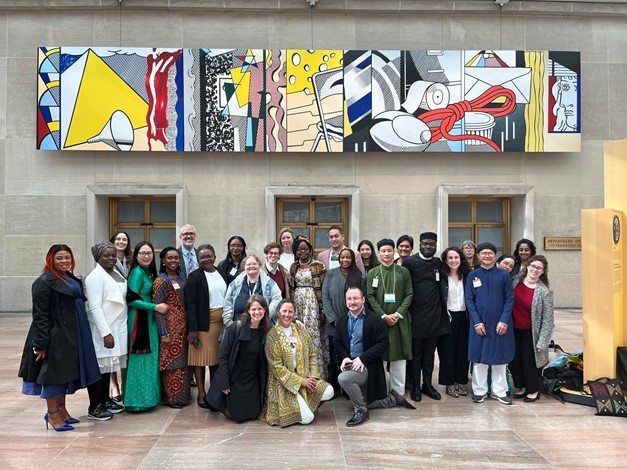
Source: Image from LIZ, the 17 october 2024 at Washington DC.
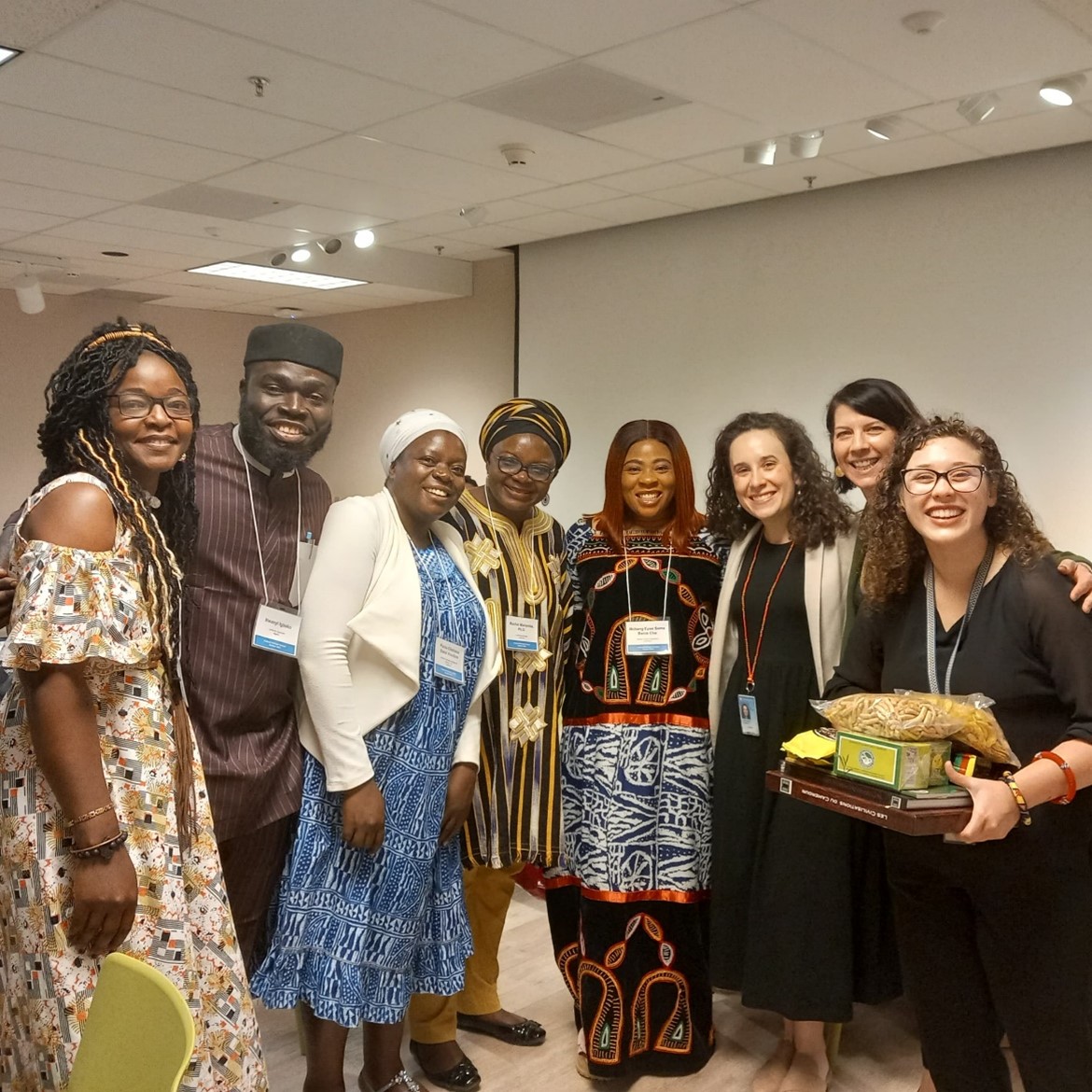
Source: Image of Lucie Mbogni Nankeng, October 7, 2024 at the National Museum of African Art/ Simthsonian/ Washington DC.
Sponsoriser ou Participer
Contribuez à la Reconnexion en Participant ou en Sponsorisant… dès Aujourd’hui !
La quête pour renouer avec notre identité culturelle ne dépend pas uniquement des artistes. Contactez-nous dès maintenant pour découvrir comment soutenir le Fonds Lessa’a et restez informé(e) des dernières avancées de notre travail.